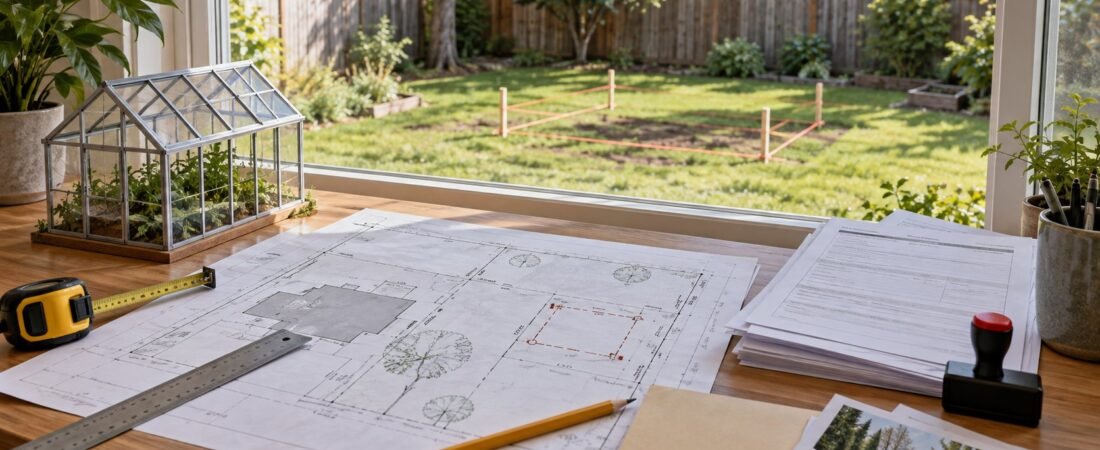
A greenhouse may be sold as a kit, but local authorities can still treat it as an accessory structure. Whether you need approval depends on the location, size, height, foundation, utilities, permanence, and local code. No reliable nationwide size threshold applies everywhere.
Check before ordering, not after delivery. A permit problem can force a change in location, foundation, dimensions, electrical plan, or even the greenhouse model itself.
Planning or zoning comes first
Zoning rules determine where a greenhouse may sit on the property. Ask about setbacks from side and rear property lines, distance from the house and other structures, maximum height, lot coverage, visibility restrictions, easements, and rules for corner or waterfront lots.
A structure may be exempt from a building permit yet still need to comply with zoning. “No permit required” does not necessarily mean “no rules apply.” Request the answer in writing or save the relevant municipal page.
Building permits and structural information
The building department may ask for dimensions, a site plan, foundation details, anchoring, glazing information, or evidence that the structure can resist local wind and snow loads. Larger or permanently founded greenhouses are more likely to receive scrutiny.
Before buying, ask the seller for drawings, manuals, engineering documentation, and exact load ratings. A vague claim such as “heavy duty” is not a substitute for information the local reviewer can use.
Electricity, plumbing, and heating
Separate permits may apply when the project includes a new electrical circuit, permanent water line, drain, gas supply, or fuel-fired heater. Greenhouses are wet environments, and outdoor wiring and equipment require appropriate protection.
Have licensed professionals advise on work that requires them locally. Portable equipment does not automatically remove safety or code concerns, particularly when heaters or high electrical loads are involved.
Homeowner associations and private restrictions
An association, architectural-review committee, lease, or deed restriction may impose rules beyond municipal requirements. Common concerns include visibility, color, materials, height, screening, and placement. Approval from one authority does not replace approval from another.
Questions to ask the local office
- Is a greenhouse considered an accessory structure at this address?
- Is zoning approval required even if no building permit is needed?
- What setbacks, height limits, and lot-coverage limits apply?
- Does the answer change with size, foundation type, glazing, or permanent utilities?
- Do you need engineered wind or snow-load documents?
- Are electrical, plumbing, mechanical, or fuel permits separate?
- What drawings and inspections are required, and what are the current fees?
Keep a project record
Save approved plans, permit numbers, inspection records, manufacturer instructions, and photographs of concealed foundation anchors or utility work. These documents can help with later repairs, insurance questions, property sales, and warranty claims.
Permit research belongs early in the planning process. Our Plan Your Greenhouse page includes it in the larger sequence, and Greenhouse Foundation Options explains how the base can change a project’s scope.