A successful backyard greenhouse begins with careful planning. Before comparing kits or choosing materials, it helps to understand where the greenhouse will sit, how much growing space you need, what your local climate demands, and what the complete project may cost. This guide walks through the major decisions so you can develop a practical plan before making a significant purchase.
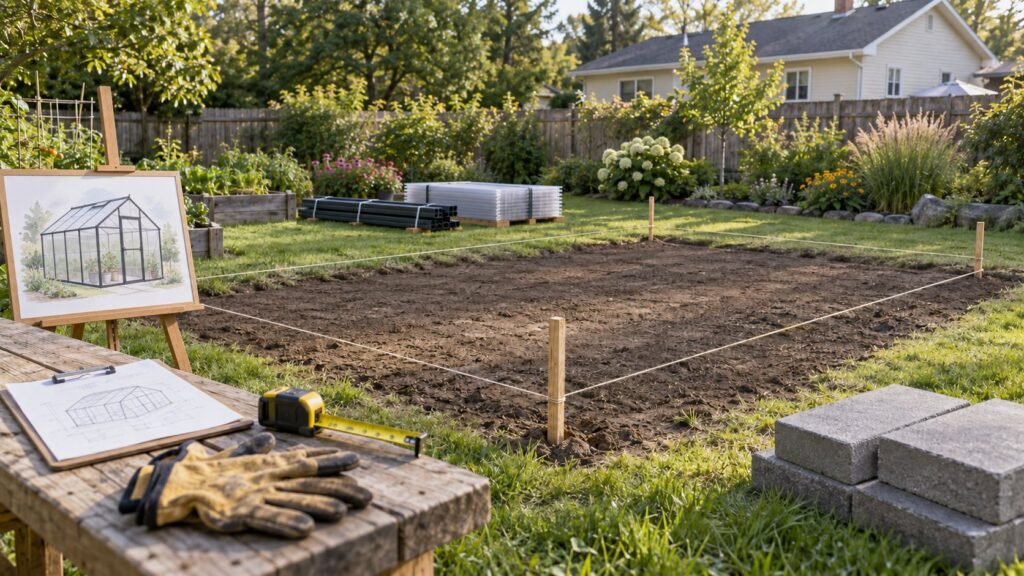
Start With How You Plan to Use the Greenhouse
Begin by deciding what you want the greenhouse to do. Starting seedlings for an outdoor garden requires a different layout than growing vegetables through several seasons, protecting tender plants during winter, or creating a comfortable space for both plants and people. Think about what you expect to grow, when you want to use the greenhouse, and whether your plans may expand. These choices will influence the size, location, glazing, ventilation, heating, and equipment you eventually need.
Choose the Location Carefully
Look for a level, well-drained area that receives dependable sunlight, especially during the shorter days of the year. Nearby buildings, fences, and deciduous trees may cast much longer shadows in winter than in summer. When possible, protect the site from severe wind without blocking the light the greenhouse needs.
Convenience matters too. A greenhouse that is reasonably close to the house is easier to check during bad weather and simpler to supply with water and electricity. Before settling on a location, consider drainage after heavy rain, access for delivering greenhouse components, and enough working room around the finished structure for installation, cleaning, and repairs.
Choose a Size That Allows Room to Grow
Greenhouses often feel smaller once you add benches, shelving, plants, storage, and walking space. Measure the available area carefully and sketch a basic interior layout before choosing the outside dimensions. Make sure there is enough aisle space to move comfortably, reach the plants, and bring supplies through the doorway.
It is also worth considering how your plans could change. A greenhouse used only for seed starting may be relatively compact, while year-round growing or larger container plants require more usable space. Buying more greenhouse than you can comfortably heat, cool, and maintain can be wasteful, but choosing one that is immediately overcrowded may be equally frustrating.
Check Local Rules and Utility Needs
Before ordering a greenhouse, check whether your city, county, homeowners association, or neighborhood has requirements for accessory structures. Rules may address permits, property-line setbacks, maximum height, foundation types, drainage, or how securely the structure must be anchored. Confirming these details early can prevent an expensive kit from arriving before you know whether you can legally install it.
Consider water and electricity at the same stage. A nearby water source makes routine plant care easier, while safe electrical service may be needed for fans, heaters, lighting, pumps, or automatic controls. Plan any permanent wiring for outdoor and damp conditions, and install it according to local electrical requirements.
Plan the Foundation and Anchoring
The foundation keeps the greenhouse level, supports the frame, and helps prevent shifting over time. Depending on the greenhouse and the site, suitable options may include a compacted gravel base, treated wood perimeter, concrete footings, or a full concrete slab. The manufacturer’s instructions should guide the final choice, particularly for larger or heavier structures.
Anchoring is equally important. A lightweight greenhouse can be damaged or displaced by wind even when the frame itself appears sturdy. Review the greenhouse’s wind and snow ratings, choose an anchoring system suited to the foundation, and plan for local storms and winter conditions rather than only mild weather.
Budget for the Complete Project
The advertised price of a greenhouse kit may represent only part of the final investment. Delivery, site preparation, the foundation, professional assembly, permits, shelving, ventilation, water, electricity, heating, and shade systems can all add to the total. Make a preliminary list of these expenses before comparing greenhouse prices.
Operating costs also deserve attention, particularly if you plan to heat the greenhouse through cold weather or cool it during hot summers. A more expensive greenhouse with better insulation, ventilation, and structural durability may sometimes cost less to own than a cheaper kit that requires extensive upgrades or frequent repairs.
Turn Your Ideas Into a Practical Plan
Before shopping, write down your intended use, preferred location, approximate size, local requirements, foundation needs, utility plans, weather conditions, and total budget. This short project outline will make it easier to compare greenhouse styles and identify which features matter most for your property.