A greenhouse needs more than a sturdy frame and transparent covering to perform well. Ventilation, air circulation, shade, heating, water, electricity, shelving, and monitoring equipment all affect the growing environment. Planning these systems before assembly can prevent crowded layouts, unsafe temporary solutions, and expensive changes after the greenhouse is already in place.
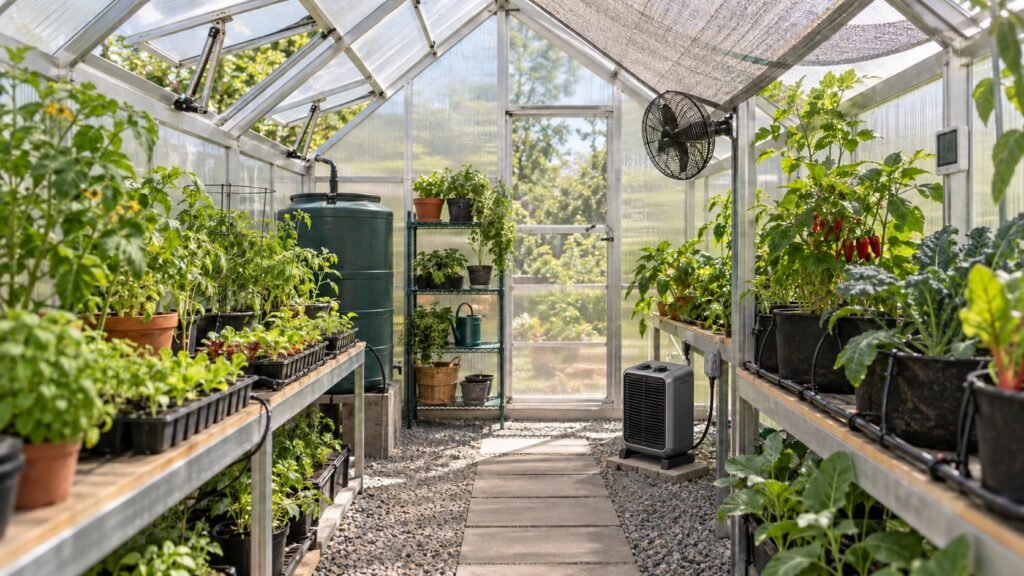
Prepare the Site Before Assembly
Complete the foundation, drainage, and utility planning before the greenhouse kit arrives. The base must be level, square, and compatible with the manufacturer’s anchoring system. Small foundation errors can make the frame difficult to assemble and prevent doors, vents, and glazing panels from fitting correctly.
Plan how the packaged components will reach the site and where they can be safely stored during assembly. Review the instructions in advance, confirm which tools and helpers are needed, and allow more time than the advertised assembly estimate when conditions are unfamiliar. Larger glass, polycarbonate, and steel structures may justify professional installation.
Provide a Way for Hot Air to Escape
Ventilation is one of the most important greenhouse systems. Sunlight can quickly raise the interior temperature, even in mild weather. Roof vents release rising hot air, while doors, side vents, and lower intake openings let cooler outside air in.
Automatic vent openers can respond to temperature without electricity and reduce the need for constant manual adjustment. In warmer conditions or larger structures, you may need an exhaust fan and an appropriately sized intake opening. Select ventilation equipment based on the greenhouse’s size, not only after overheating becomes a problem.
Keep the Interior Air Moving
Ventilation exchanges indoor and outdoor air, while circulation fans keep air moving within the greenhouse. Gentle, continuous movement reduces stagnant pockets, evens out temperature differences, and limits moisture buildup on plants and greenhouse surfaces.
Fans should move air around the growing area rather than blast directly at nearby plants. Placement depends on the greenhouse’s length, shape, shelving, and plant arrangement. Plan electrical outlets and mounting locations before the benches and growing containers make those areas difficult to reach.
Plan for Shade and Summer Cooling
Ventilation alone may not control heat during sunny summer weather. Shade cloth reduces the amount of solar energy entering the greenhouse and can be installed seasonally when the strongest sunlight becomes excessive. The appropriate shade level depends on the plants, climate, greenhouse covering, and time of year.
Exterior shade usually blocks heat before it passes through the glazing, although it must be secured against wind and kept clear of moving vents. Evaporative cooling may help in dry climates but is generally less effective where outdoor humidity is already high. Begin with temperature monitoring so cooling decisions are based on actual greenhouse conditions.
Decide Whether the Greenhouse Needs Heat
The amount of heat required depends on the greenhouse’s size, glazing, air leakage, outdoor temperature, wind exposure, and the lowest indoor temperature the plants can tolerate. Keeping a greenhouse slightly above freezing is very different from maintaining warm growing conditions throughout winter.
Use equipment designed for the intended environment and follow all manufacturer clearances and installation instructions. Electric heaters require adequate circuits and protection from moisture, while fuel-burning systems require proper ventilation and attention to combustion safety. A dependable thermostat and separate temperature alarm can provide protection if the primary heating system fails.
Plan Safe Access to Water and Electricity
A convenient water supply reduces the work of hand watering and makes it easier to add drip irrigation or automatic watering. Plan where hoses, filters, timers, and irrigation lines will run so they do not create tripping hazards or interfere with doors and walkways. Drainage must also handle spilled water and irrigation runoff.
Electrical needs may include fans, heaters, lighting, pumps, thermostats, and monitoring equipment. Greenhouses are damp environments, so extension cords and improvised connections are poor substitutes for properly planned service. Permanent electrical work should use suitable outdoor-rated equipment and comply with local requirements.
Design the Interior Around Daily Use
Sketch the interior before purchasing benches and shelving. Allow enough aisle width to move comfortably, carry supplies, reach the plants, and clean the greenhouse. Consider door width, turning space, overhead clearance, and access to vents and controls.
Use vertical space carefully, but don’t let upper shelves or hanging plants block too much light from the growing area below. Reserve space for tools, soil, watering equipment, and temporary plant staging. Adjustable or movable components make it easier to change the layout as plants and growing methods change.
Monitor Conditions Before Adding More Equipment
A basic thermometer that records daily highs and lows can reveal conditions that are easy to miss between visits. Humidity monitoring can also help identify excessive moisture, poor ventilation, or unusually dry conditions. Place sensors near the growing area and away from direct sunlight or heating equipment that could distort the readings.
Automation can operate vents, fans, heaters, irrigation, shade systems, and alarms, but it should support a sound greenhouse design rather than compensate for one that is poorly ventilated or difficult to maintain. Start with systems that protect plants from the most likely temperature and watering problems, then add equipment as experience shows what is needed.
Build the Greenhouse as a Complete System
Plan the structure, foundation, ventilation, heating, water, electricity, and interior layout together. Thinking through the complete system before installation makes the greenhouse easier to operate and helps reveal expenses or limitations that may affect which kit provides the best overall value.