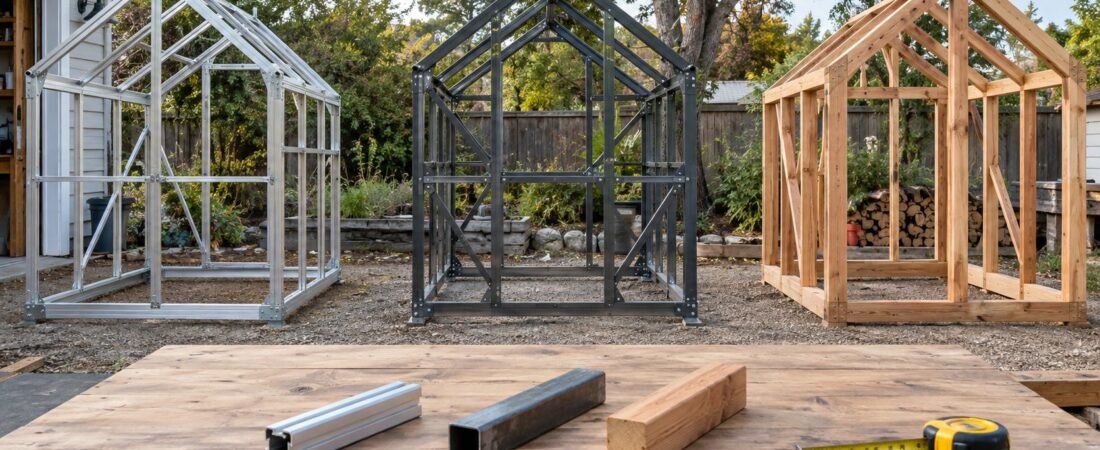
A greenhouse frame must support the glazing, keep doors and vents aligned, and safely transfer wind and snow loads to the foundation. Aluminum, steel, and wood can all work well, but the material name alone tells only part of the story. The size and shape of each member, connection details, finish, bracing, and complete-system rating are just as important.
Aluminum frames
Aluminum is lightweight, corrosion-resistant, and easy to form into the narrow profiles used in many greenhouse kits. Those slim members create less shade than bulky framing and need little routine finishing. Extruded channels can also hold glass or polycarbonate neatly.
Aluminum’s lightweight nature makes it easier to ship and assemble, but it does not guarantee strength. Compare the actual frame sections, bracing, fasteners, and published structural ratings. Thin members in an economy kit may not suit a high-wind or heavy-snow location.
Aluminum conducts heat readily, so the frame can become a path for heat loss and condensation. Better systems address glazing seals and thermal performance, but buyers should still compare the greenhouse as a complete assembly.
Galvanized steel frames
Steel offers high strength and is common in hoop houses, larger hobby structures, and greenhouses that need substantial spans or load capacity. Galvanizing or another protective finish helps prevent rust.
Steel is heavier than aluminum, and cut edges, scratches, fasteners, and areas that stay damp may need attention. Tube diameter, wall thickness, coating, truss design, purlins, and connection hardware determine how the finished structure performs.
A steel frame may be an excellent choice in demanding weather, but only when the specific model has appropriate engineering and anchoring. The word “steel” is not itself a wind or snow rating.
Wood frames
Wood has a warm, traditional appearance and is easy to cut, customize, and attach shelves or equipment to. It also conducts less heat than metal. A carefully designed wood greenhouse can be sturdy and attractive.
The tradeoff is ongoing exposure to humidity, condensation, soil splash, and insects. Species, treatment, detailing, ventilation, finishes, and separation from wet ground affect service life. Thick wood members also cast more shade than slender metal profiles.
Fasteners and connectors must be compatible with treated lumber and the humid environment. Because wood moves as moisture changes, glazing details need to accommodate that movement.
Compare systems, not labels
- Published wind and snow ratings for the complete assembled greenhouse
- Required foundation, anchors, bracing, and installation method
- Compatibility with the selected glass or polycarbonate panels
- Finish or galvanizing specification and warranty exclusions
- Availability of replacement fasteners, glazing clips, and frame parts
- Door and vent reinforcement in exposed conditions
- Whether modifications or attached shelves affect the warranty
Which frame is the practical choice?
Aluminum often fits homeowners who value low maintenance, straightforward kit assembly, and narrow framing. Galvanized steel is compelling when you need greater structural capacity or a hoop-style design. Wood suits buyers who value appearance and customization and are prepared for periodic inspection and maintenance.
The final choice should reflect the exact model and site. A well-engineered aluminum greenhouse can outperform a lightly built steel one, and a properly detailed wood structure can outlast a poorly protected metal frame. Ask the seller for useful specifications rather than relying on broad material claims.
Frame material is one part of the decision. Compare it with glazing, roof shape, ventilation, ratings, and warranty on our Choose a Greenhouse page. For glazing choices, read Polycarbonate vs. Glass Greenhouses.