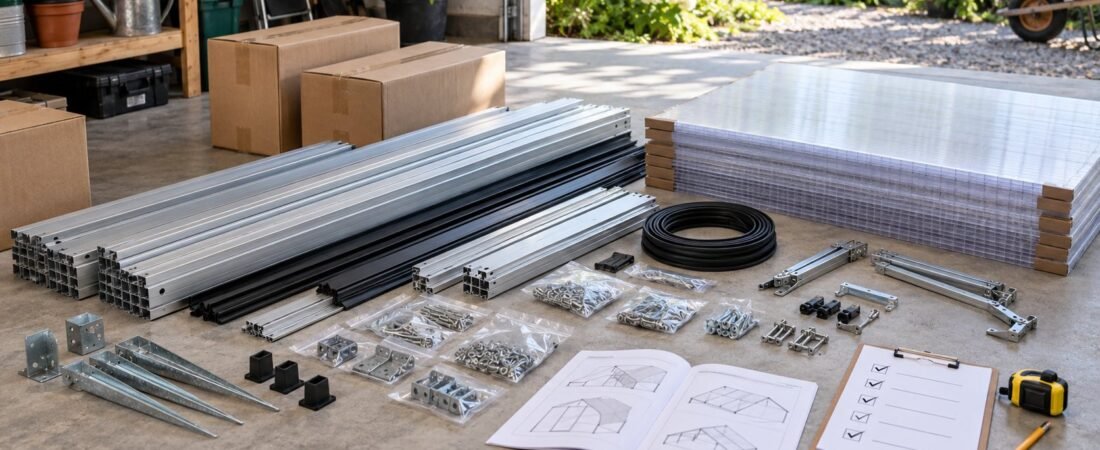
Greenhouse kits are difficult to compare from photographs alone. Two models with the same footprint can differ substantially in usable height, panel quality, ventilation, anchoring, replacement parts, and post-delivery work. A written checklist keeps the comparison focused on long-term usefulness rather than promotional language.
Dimensions and everyday access
- Exact exterior dimensions and required installation clearance
- Interior eave, ridge, and door heights
- Door width, direction of swing, threshold, and locking method
- Usable standing room near sloped walls
- Space for planned beds, benches, paths, equipment, and mobility needs
- Whether the greenhouse can be expanded later
Glazing
- Material, thickness, number of layers, and light transmission
- Clear versus diffused light
- Ultraviolet protection and which face must point outward
- Insulation or thermal-performance information
- Hail or impact information, where relevant
- How panels are retained in the frame
- Expected service life, cleaning instructions, and replacement availability
For a closer look at the two common rigid options, see Polycarbonate vs. Glass Greenhouses.
Frame and structure
- Frame material, member dimensions, finish, bracing, and connection hardware
- Complete-system wind and snow ratings—not isolated component claims
- Whether ratings depend on a specified foundation, anchors, or professional assembly
- How doors, vents, and glazing are secured during severe weather
- Corrosion protection and compatible fasteners
- Availability of replacement frame parts
Ventilation and temperature control
- Number, location, and net opening area of roof and side vents
- Manual or automatic vent openers and their adjustment range
- Provision for exhaust fans, intake shutters, circulation fans, and shade cloth
- Compatibility with heaters, sensors, controllers, and electrical service
- Screens and the effect they may have on airflow
- Safe manual operation during a power or control failure
Read How Much Ventilation Does a Greenhouse Need? before accepting a kit simply because it includes a roof vent.
Foundation and installation
- Required foundation dimensions and acceptable materials
- Specified anchor type, spacing, and installation method
- Whether the site must be perfectly level and how drainage is handled
- Tools, ladders, lifting help, sealants, and hardware not included
- Estimated assembly time and the clarity of the manual
- Whether professional installation is available and what it includes
Price and delivery
- Kit price plus freight, lift-gate, remote-area, and residential-delivery charges
- Foundation, site preparation, permits, utilities, and professional labor
- Missing essentials such as vents, anchors, gutters, shelves, shade, or controls
- Package dimensions, pallet weight, unloading responsibility, and storage before assembly
- Damage-inspection procedure and deadline for reporting missing or broken parts
- Likely cost of heating, cooling, maintenance, and replacement glazing
Warranty and seller support
- Written coverage for the frame, glazing, finish, hardware, and moving parts
- Separate warranty periods and exclusions
- Whether wind, snow, hail, installation errors, modifications, or commercial use are excluded
- Who pays shipping or labor on approved claims
- How long replacement parts are expected to remain available
- Whether technical questions are handled by the retailer, manufacturer, or installer
- Return policy before and after the packages are opened
Red flags
Be cautious when a listing omits panel thickness, member dimensions, anchoring details, or complete wind and snow ratings. Stock photographs used across unrelated brands, unclear warranty language, missing manuals, and no route to buy replacement panels are also reasons to slow down.
Customer reviews can reveal assembly and service problems, but they do not replace specifications. Look for patterns across verified sources and pay particular attention to experiences from climates similar to yours.
Make the final comparison on paper
Create a column for each finalist and record the answers, total installed cost, unresolved questions, and warranty terms. A higher-priced kit may offer better value if it includes useful ventilation, stronger panels, dependable parts, and a foundation system suited to the site. Conversely, paying for features that do not support your actual growing plan adds cost without improving the project.
Use this checklist together with What Size Greenhouse Do You Need?, Choose a Greenhouse, and Greenhouse Foundation Options.