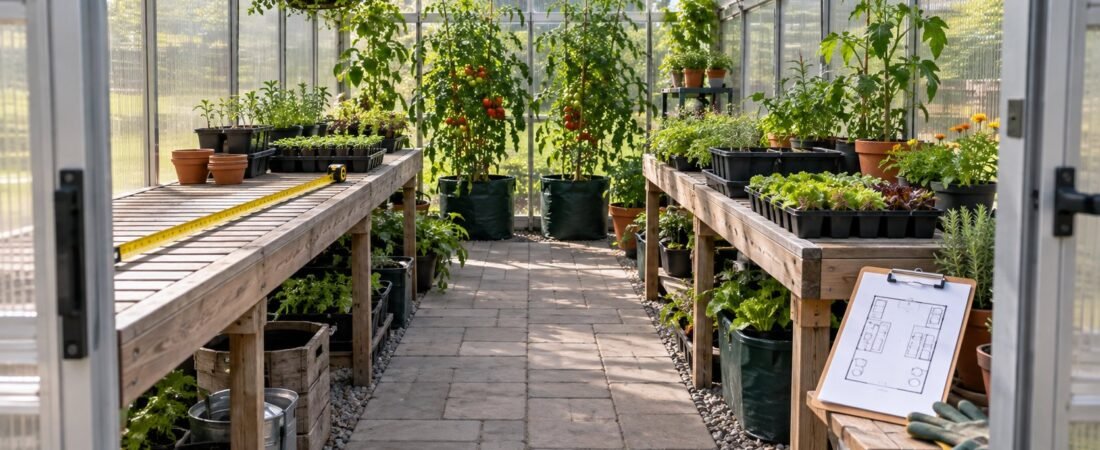
A greenhouse can look surprisingly spacious when it is empty. Add benches, shelves, pots, a water barrel, and a comfortable aisle, however, and the usable growing area shrinks quickly. Choosing the right size is therefore less about picking a standard kit and more about working backward from how you expect to use the space.
For many first-time owners, the safest practical advice is to choose the largest greenhouse that fits the site, budget, and local rules without creating an ongoing maintenance burden. Greenhouses are rarely criticized for having too much growing room. The more common frustration is discovering that an attractive small kit cannot accommodate the plants, work area, and equipment originally imagined.
Begin with the purpose of the greenhouse
Write down what you want the greenhouse to do during each season. A structure used mainly to start seedlings in spring has different space requirements from one intended for year-round vegetables, tall tomato plants, tropical specimens, or relaxed potting and garden work.
- Seed starting usually favors wide benches or tiered shelving and plenty of light.
- In-ground growing needs open beds, paths, and enough height for mature crops.
- Container growing requires flexible floor space and a plan for moving heavy pots.
- Overwintering tender plants may demand open floor area rather than permanent benches.
- Year-round use adds room for heaters, fans, water storage, insulation, and controls.
If several of these goals apply, plan around the season when the greenhouse will be fullest. A floor plan that works beautifully in April may feel crowded when tomatoes reach the roof in July, or large containers move indoors in October.
Measure usable space, not just the footprint
Manufacturers usually describe a greenhouse by its outside dimensions. Those measurements don’t tell you how much usable growing space remains after accounting for the frame, door swing, sloped walls, benches, and walkways. Draw the interior to scale before buying.
A single central aisle works well in many narrow greenhouses. Wider structures can accommodate a central bench with paths on both sides, but every additional path reduces growing area. Make sure the main aisle is wide enough for you to turn, bend, carry trays, and use any mobility aid or garden cart you expect to bring inside.
Allow for headroom
Wall height and roof shape matter almost as much as floor dimensions. Greenhouses with low eaves or sharply sloped sides may have limited standing room near their edges. That can make the apparent footprint misleading and reduce space for tall shelving or crops.
Check the door width and threshold, too. A greenhouse is much easier to use when trays, soil bags, carts, and equipment can move through the entrance without tilting or lifting over a high lip.
Sketch the interior before choosing a kit
A simple scale drawing can prevent an expensive sizing mistake. Mark the door, paths, benches, beds, shelves, water source, electrical equipment, and any areas that must remain accessible. Then place the plants or trays you expect to grow at peak season.
Standard-size benches can help you estimate capacity, but do not fill every wall automatically. Leaving some adaptable space gives you somewhere to harden off seedlings, isolate a problem plant, store supplies briefly, or add equipment later.
Think about expansion
Some greenhouse systems can be extended with additional bays, while others cannot be enlarged economically after installation. If you expect the project to grow, compare expansion options before purchasing. The site itself also needs room for an addition, exterior access, drainage, and maintenance around the walls.
A smaller greenhouse may still be the right choice when the budget is limited or when you are testing whether greenhouse gardening suits you. In that case, prioritize an efficient shape, useful height, strong ventilation, and flexible shelving rather than squeezing in the greatest possible number of plants.
A practical decision process
- List the plants and activities the greenhouse must support.
- Estimate the number and mature size of plants at the busiest time of year.
- Draw beds, benches, shelves, equipment, and comfortable paths to scale.
- Check interior height, door width, threshold, and roof clearance—not merely length and width.
- Confirm that the selected footprint leaves exterior working room and complies with setbacks.
- Compare the cost of the next size up before making the final decision.
Size is only one part of the choice. Our Plan Your Greenhouse page covers site, budget, utilities, and local requirements, while Choose a Greenhouse explains the structural features worth comparing.